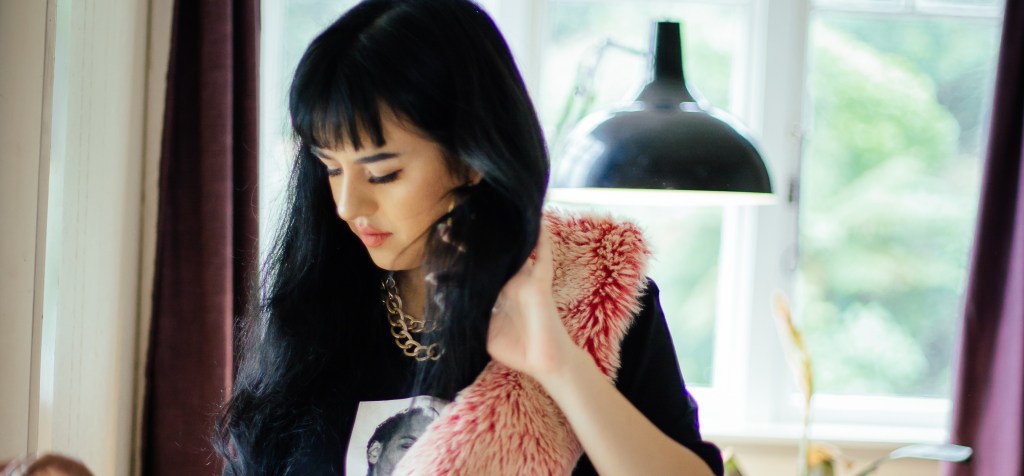
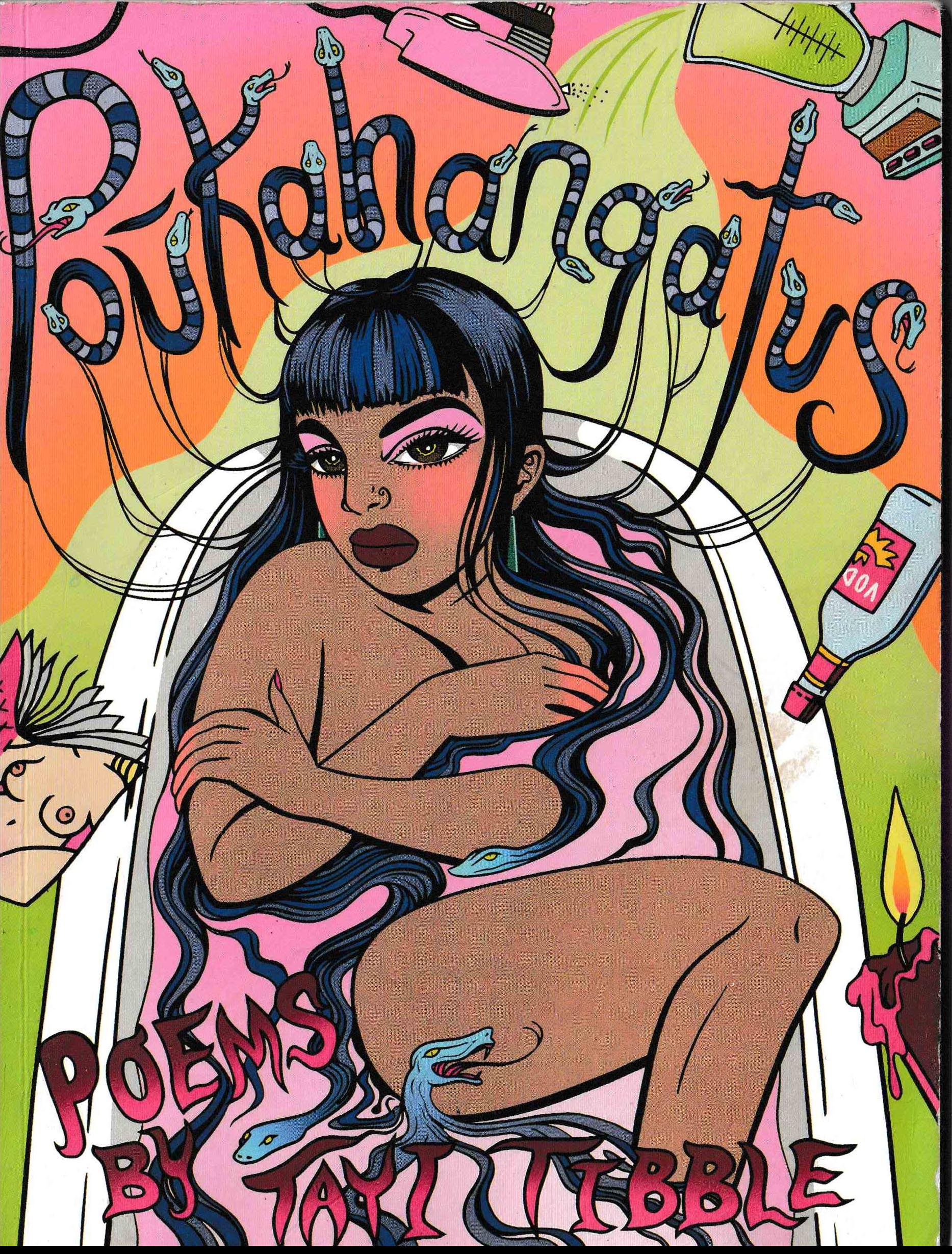
22-year-old Tayi Tibble has recently graduated her masters and published her first poetry book titled Poūkahangatus. It featured at number one twice on the Unity Books bestselling list and was the first book of poetry to claim the number-one spot since Hera Lindsay Bird in 2016. It was reviewed by Jenna Todd for the Spinoff Papercuts Podcast: as having “a freshness, a naughtiness, and an incredible cover”.
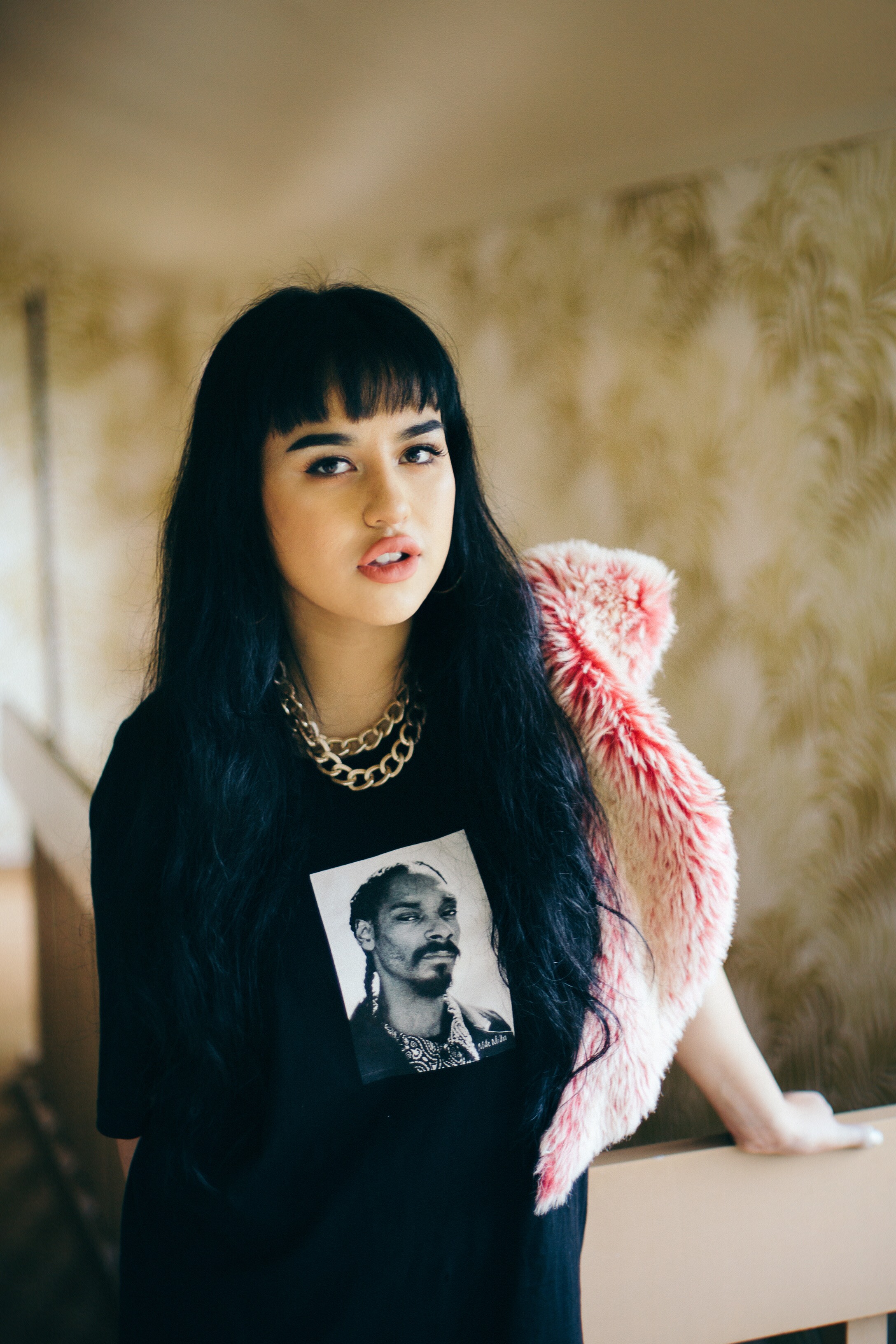
Fresh and naughty with incredible ‘covers’ are themes brown girls are universally loved and recognised for. Being a scholar and unapologetic poet published straight out of uni sets this brown girl apart. I knew Tibble and I would get on because she goes by ‘Paniaofthekeef’ on Instagram. I knew because she went to Aotea College near where I grew up in Wellington and because she came to our interview in brand new Fila sneakers with a platform that made her outfit just drip [LIKE].
“I’m like a gangsta bitch but I remember being a teenager and being real shame about that like dressing real twee,” she says. We talk about being unapologetically who you are in 2018 and what decolonising the mind means to her as well as what being an urban Māori means today. We talk about how much harder women of colour have worked to get into positions of significant power and how important it is to keep pushing that kaupapa so our daughters and sons can dream a bit bigger, aim a bit higher and feel a sense that achieving those dreams are possible for them too.
For Tibble leading by such a high example is a pressure and a privilege – and a platform she’s intent on growing. “People will often ask me ‘Oh how do you feel about being a Māori writer?’ in reference to the fact that Pākehā people don’t get called ‘Pākehā writers.’ I’ve also encountered other Māori writers rejecting that label, saying that they aren’t or can’t be ‘a Māori writer.’ They’re just a writer like everyone else and I get that but…. I don’t really fuck with that. I’m a Māori writer. In my mind that’s undeniable and inescapable, and it’s important that I embrace that.
SERUM: So you embrace the responsibility?
TAYI: I have TV. Cause I can see the detriments of not doing it.
The detriment of not having role models, or people to walk the path before you and guide so….so yeah you have to there’s too much on the line. Too much too lose – but so much to gain too.
SERUM: Do you feel there is progress happening in New Zealand in 2018?
TAYI: Yeah I do. You have to believe right, in order for it to be realised. I think more and more people are becoming aware of inequalities and have the right intentions at heart. I think most people want a better and fairer more creative New Zealand. But I also think we could be further along. ..
Okay I’ll tell you my Don Brash story. So I was at Hamilton Press Club, I was there because Vincent O’Malley, he’s a Pākehā historian and a really cool guy – he’s doing a campaign to teach Waikato wars in schools – so he gave an address about that and I was like sweet, sweet, thinking we’re just going to have a fancy lunch and free wine, but then the floor was opened up to Don Brash to reply, and he starts popping off as per usual saying things like Waikato wars? What about Māori on Māori crimes? [Laughs] Just being Don Brash. The thing with Don Brash though – is that I feel sorry for him, because he can’t imagine a different New Zealand. He can’t imagine anything outside of anything he knows or what he thinks he knows. I honestly just think that everyone needs to take some time and just imagine what New Zealand could be like.
One of my fav quotes is from Lana Del Rey – I don’t think it’s from her but she said it and it’s:
‘Life imitates art’ which is why we need to put more positive brown art out, and then society’s attitudes will follow – we have to be able to imagine a better New Zealand. Which is why it’s so important to have brown people leading the discussions, curating the art, directing the festivals and writing the media.
I’ve done interviews before where I just feel myself clam up because I get the feeling that the interviewer is not really listening to me, they’re listening for something and it’s that extraction, exploitation even, that’s actually real dangerous and uncool.
If you want to talk to me about my work, you have to meet me at my level. Like this conversation we are having now is really cool, like you get it and so I can talk openly about this sort of stuff without feeling like I’m educating or protesting.
 SERUM 精华 Online news for the creative diaspora.
Leave a comment