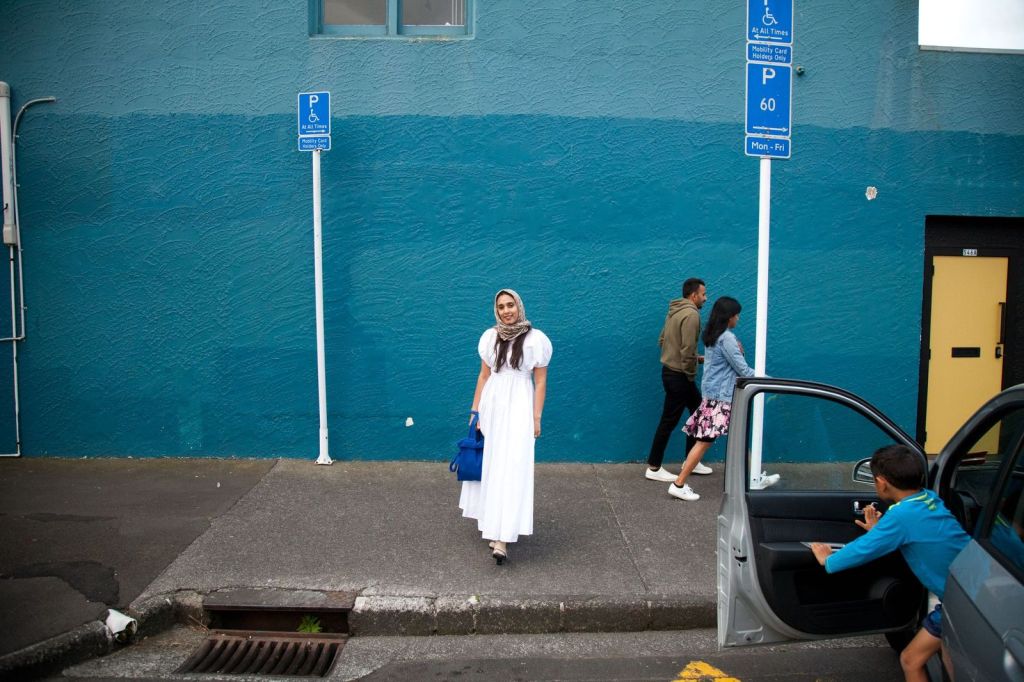
Shamima Lone stands with her mum at Miss Crab on Ponsonby Rd in Auckland, NZ. It is one week after the Christchurch terror attack where 51 men, women and children were shot dead as they prayed on Al-Jumah, which is held every Friday for Muslims, and means the day of congregation in Arabic.
For Muslims, it is a holy day.
The shooter would become the first person to go to prison for life in New Zealand, without parole, ever. He will not be named here, but it is clear he picked that day with an intention, streaming the shooting live on Facebook. The youngest shot that day way three-years-old.
In Auckland, fashion lovers used it as a vehicle to show solidarity with New Zealand’s Islamic community.
Prime Minister Jacinda Ardern received criticism and praise for putting on a headscarf during that time. At Miss Crab, Shamima was part of a team put together by The Love Movement, an Auckland based fundraising organisation that aids communities hit by devastating events like the Indonesian earthquakes, or the mosque attack.
On their event page, they wrote, “Our Muslim sisters have spoken to us of the discrimination they still face while wearing a hijab and the elevated fear they have been experiencing simply leaving the house with their hair covered.
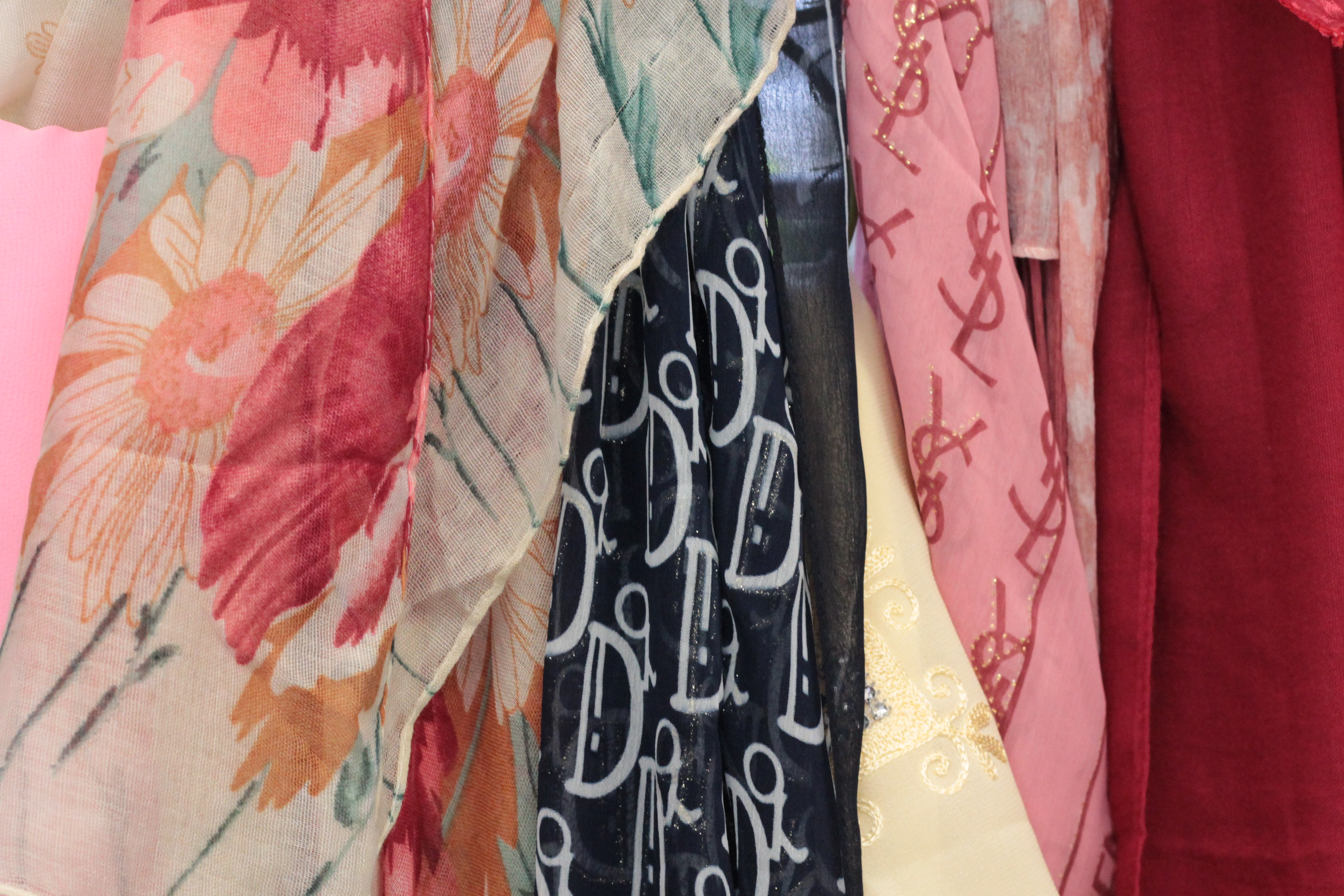
In abundance, Shamima, her mother and women from the Auckland Muslim community donated scarves to the cause.
Something special Shamima’s mum was able to gift women who came to the #headscarfsforharmony event was the knowledge of Noor.
It means ‘the light’, and it is said to be the glow that radiates from the face when a woman wears a hijab she said.
Shamima’s sister-in-law, Rebekah Bristow said: “For Shamima, when she’s wearing a headscarf or a hijab, she’s had a lot of racist remarks and been discriminated against.
“It’s important for us non-Muslim white women to really acknowledge the ease at which we can wear this,” Rebekah said.
It is March 2018 and New Zealand’s staunch attitude that “racism does not exist here” is about to be exposed for the lie it is.
So violent in its silence, racist people in Aotearoa smile in your face while they insult you, said Shamima, that is one of many scenarios international people live through, she said.
Born in Auckland, and now 38, she told Digital Serum she does not wear a hijab anymore – unless it is to a funeral. “I wore a hijab from 14 to when I got married at 22, then after I got divorced I transitioned out of it wearing hats and stuff like that.
“I just wanted to experience a different kind of experience. Back in those days, as soon as someone non-Muslim meets you, that’s all they want to know about you. The conversation is never around anything other than your religion or headscarf, you’re just so absolutely seen as that person.
“Auckland uni can be quite isolating; you go to classes with 100s of people and you don’t get to chill with anyone. I’d catch my bus from Queen St and people would just come up and scream shit at me at the university, like ‘terrorist’ or whatever. It was so hard.”
“Yeah, it was a very depressing period of my life.”
Just before Covid-19 2020, Shamima married a Kiwi, who understood that for Shamima to stay connected to her family, he’d have to convert to Islam, so he did. Dating for people of the Islamic faith in New Zealand is tricky ground, she said.
“If he didn’t convert then we couldn’t have gotten married, and my family would have disowned me.
“I knew that would devastate me… I’m glad I was able to make it work in a way that didn’t break anything else.”
“Growing up you’d have to date very respectful people who would try and understand where you’re coming from because I’m not trying to offend that person, I’m trying not to get in trouble with my family.”
“You know you can’t date anyone, or hold hands with someone,” she said.
“We talked about it a lot, getting married would have to be in a way that my family would accept it because I thought about what it would be like if they were not to accept it and how I would be outcast and lose touch with my family, roots, culture.
“It’s a complicated thing, but because they could meet him, and he could come to family things I feel like it’s really brought parts of my life together. For years or decades, that’s not been able to happen.”
Shamima’s mum was born in Fiji. “My real dad is not really part of it, but my step-dad is from Pakistan.”
Shamima says the #headscarfsforharmony event at Miss Crab was the first time she and her mother had been out together in Shamima’s social [and western] spaces.
Equipped with bags and bags of designer scarves, I loved it.
“My grandparents and my mum came here in the late ’70s from Fiji,” she said.
Shamima was in high school when she started wearing a hijab. Her family decided when she got her period, it would be a good time to start.
“I was very much a believer of my religion, so the first day I wore it to high school, I noticed and felt a change of perception of me.”
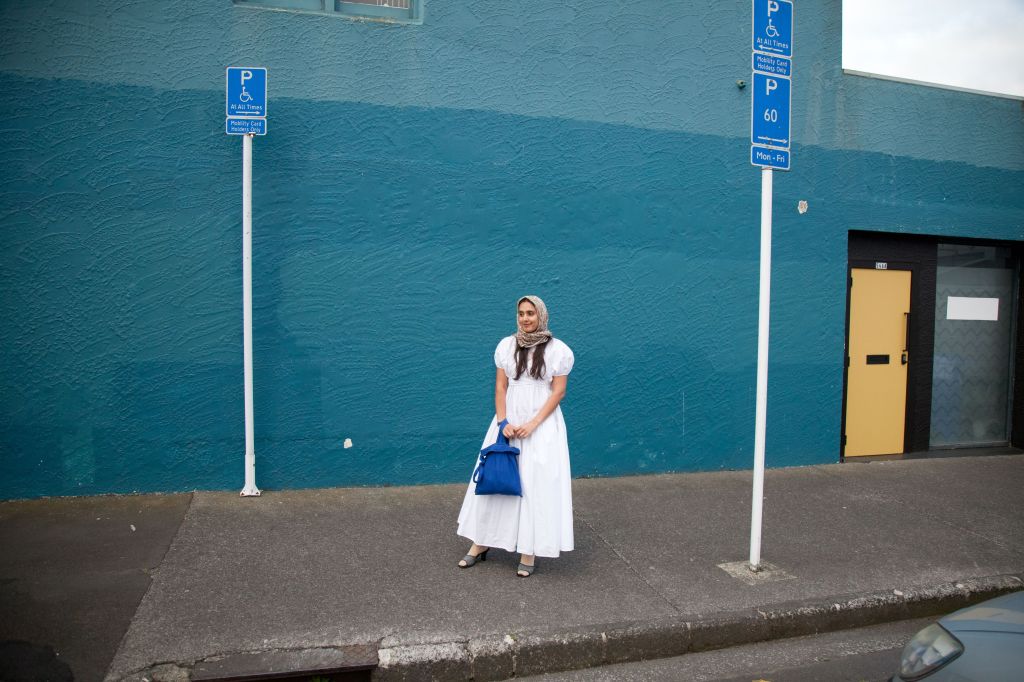
Growing up navigating racism in NZ
While some women living between Western and Eastern cultures can give people back just as much shit as they’re given in public, Shamima says, she didn’t get that tough girl trait.
“I felt how the world perceived me so it made me more insecure. I wasn’t someone who was like, I’m going to be brave and do my thing and not care what people think of me, I was very much scared of it.”
Almost two years after the Christchurch shootings, Shamima says she can feel the progress of inclusion and more representation in mainstream spaced making positive impacts in her community, but white guilt and tokenism is hard to wade through, she said.
Racism in NZ
The Royal Commission of Inquiry into the terrorist attack on Christchurch masjidain highlights that New Zealand Police were aware of racism toward Muslims in Christchurch. News reports claim members of the Muslim community there had formally complained to Police about it, but they had not been taken seriously.
“Earlier this year [2020] I was asked to review this exhibition that was commemorating a year after the shootings happened,” Shamima says.
“Someone got in touch and asked to write and review the show – it was awful. It’s as if they were like, does anyone know someone brown or Muslim or are related somehow, we’ll just get them to come and write this promo piece for our show.’
“When I went in, the lady explained Islam and being Muslim and told me what a Muslim would see when they looked at this piece of art.
“She talked about, ‘this is what a Muslim house has’ and basically talked me through this body of work that was not made by Muslim people. The whole time, I was like ‘What’s going on’?!
“I felt so freaked out, then I had to go home and write this review that I didn’t want to write.”
“That opportunity only came my way because of the Christchurch attacks and then people finding out about my background, it’s weird.”
Serum: It’s hard to know what your voice is when you’ve spent so much time being quiet…
S: Yup I definitely did that, even in my house growing up we had dynamics where I didn’t really speak up. So, I had to be mindful of when I can voice myself, how I do it, what words I pick and what tone I’m allowed to use.
S: Are you proud that people are having these conversations now? For me, it took ages to prove racism exists first…
S: I feel like I’m in a lot of rooms where it kind of doesn’t exist, it’s not acknowledged. It’s very present and it’s never talked about and now people are like ‘Oh you should come along and do the diversity course’ and I just think ‘Why do I need to do the diversity course!?’
Shamima Lone is a professional writer and photographer.
 SERUM 精华 Online news for the creative diaspora.
Leave a comment